Arabic Window Silhouette with Decorative: A Designer's Deep Dive
Unpacking the Visual Character of This Decorative Asset
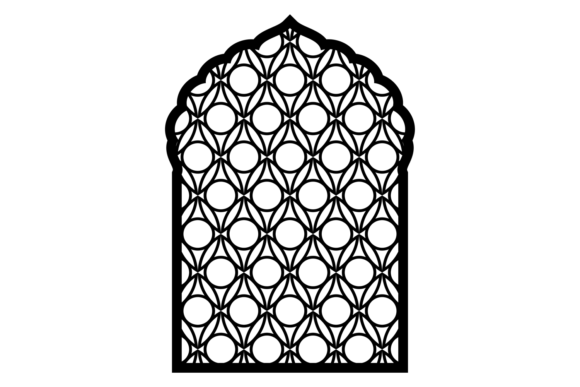
When you first encounter the Arabic Window Silhouette with Decorative, you're not just looking at a set of characters or shapes. You're looking at a piece of cultural storytelling rendered in a clean, digital format. This particular design asset is built around the intricate, flowing lines of traditional Islamic architecture, specifically the iconic mashrabiya or ornate window frame. The silhouette itself carries a sense of history and craftsmanship. The lines are not merely geometric; they weave and repeat in patterns that are both mathematically precise and artistically organic. This creates a visual personality that is simultaneously structured and deeply artistic.
The appeal of this style lies in its dual nature. On one hand, it possesses the formal weight and symmetry often associated with serif fonts and classical design. On the other, the intricate line work introduces a level of detail and delicacy that feels almost like a script font or handwritten font in its expressiveness. It’s a creative font that doesn’t shout for attention but rather invites the viewer to look closer. The overall effect is one of sophistication, heritage, and refined elegance. It’s a premium font asset that speaks to a specific aesthetic—one that values tradition, detail, and a connection to artistic lineage.
Where This Style Truly Shines: Practical Applications
Understanding the character of the Arabic Window Silhouette with Decorative is the first step. Knowing where to deploy it is where the real design strategy comes into play. This isn't a workhorse sans serif font for body copy; it's a specialist tool for creating impact and setting a specific tone. Its strengths are most evident in projects where visual hierarchy and brand perception are paramount.
Consider its role in logo design and brand identity. For a boutique hotel, a high-end restaurant specializing in Middle Eastern cuisine, or a luxury goods brand that wants to evoke heritage and craftsmanship, this silhouette can become the cornerstone of a visual identity. It works beautifully as a standalone logomark or as a decorative element within a broader wordmark. The key is to let its intricate details breathe; pairing it with a clean, modern sans serif font for supporting text creates a balanced and professional look.
In editorial design and packaging design, its applications are equally compelling. Imagine the chapter headings in a cookbook featuring regional recipes, or the decorative border on packaging for artisanal teas or spices. It adds a layer of authenticity and perceived value. For web design, it can be used as a striking hero image, a section divider, or a unique background pattern that’s subtle enough not to interfere with readability but distinctive enough to be memorable. Social media graphics for related brands can use it to create cohesive, visually rich templates that stand out in a crowded feed.
Making It Work: A Practical Guide for Designers and Creators
Integrating a distinctive asset like the Arabic Window Silhouette with Decorative into a project requires more than just dropping it into a layout. It demands a thoughtful approach to ensure it enhances rather than overwhelms. Here’s how to evaluate and implement it effectively.
First, assess the project's core message. Does it call for a sense of tradition, luxury, or cultural depth? If the answer is yes, you have a strong candidate. If the project is minimalist, tech-focused, or requires ultra-modern neutrality, this may not be the right fit. Always test the font pairing. Its ornate nature means it pairs best with simple, high-contrast companions. A geometric sans serif font like Futura or a clean serif font like Garamond can provide the necessary breathing room.
Next, scrutinize the technical details of the design assets you acquire. A quality package of the Arabic Window Silhouette with Decorative should be available in multiple formats—EPS for vector editing, JPG for general use, SVG for web scalability, and transparent PNG for easy layering. Check for included styles. Are there variations in weight, detail, or orientation? This versatility is crucial for maintaining consistency across different applications while adapting to various contexts.
Finally, never underestimate the importance of commercial licensing. If you're using this for a client, a product for sale, or any commercial venture, ensure you have the appropriate commercial font license. This protects you legally and ensures the original creator is compensated, which supports the continued creation of such high-quality modern typography resources. Readability, while less of a concern for decorative elements than for body text, is still important. Ensure the silhouette is clear at the intended size and that its intricate details don't become a muddy blob when scaled down. By applying this practical guidance, you can leverage the Arabic Window Silhouette with Decorative to create work that is not only beautiful but also strategically sound and professionally executed.